Showing posts with label Event Ideas. Show all posts

Saturday, October 15, 2011

Not Your Standard Event Seating Set-up

We all know the standard seating set-ups:
General Session = Theater
Breakout = Theater or Classroom. Mix if you are a risk taker
Meals and Awards Program = Banquet Seating, nearly always in rounds of 10

That is it. Those are the choices, or better stated the way we do things and if you know these three and can use the equations to figure out required square footage for your guest count in each of these seating arrangements, you know all you need to know to seat your guests at your meetings or events.

Wrong.

There are other choices. And this month’s column wants to both explore them and finally give you all permission to try something else.

Sofas: They aren’t just for lounges anymore!
Anyone who has ever sat in a general session room in the middle of a long row of interlocked chairs knows how completely uncomfortable the seating is and uncomfortable seating makes for a disengaged or distracted participant. As our industry continues to migrate away from lecture based learning format towards the more effective, participatory, multi-directional conversational learning models, we have to adapt our designed environments to support this style of learning. And that means we need to adapt the way we seat people at meetings and events. Rows don’t encourage conversation of classroom tables create barriers to engagement with a speaker. So instead we should take note from the lounge trend in the special events industry, which took the lesson from interior designers working in living rooms: create conversational zones/areas.


Sofa seating, particularly armless sofa seating offers not only a more comfortable place to sit down, but naturally encourages conversation. We all know that people do not (really) talk across the span of a 72” table, but if you think about the last time you went to a cafĂ© or a restaurant, you can converse across a 36” table. And if you simply arc the row of theater seats to create semi circle rows of between seven and ten, you create a natural conversation zone for when the presenter throws out a question to the audience. The intention in incorporating these other choices is vary up the possibilities and recognize that different individuals learn and engage differently. And if we don’t support those various needs in the design of our space, we are missing out on setting them up for success in capturing their attention or participation.


Rake it Backwards

Have you ever wondered why it is called “upstage” or “downstage”? Well, a long time ago, the floor of an auditorium used to be flat and the stage was raked, meaning it was lower in the front of the stage than it was at the back to help the audience be able to see the actors on stage. Thus when you moved upstage, you were literally walking up hill towards the back of the stage. Then it flipped and stages became flat while the floor of the auditorium was raked to set each row of chairs progressively higher than the row in front.

Well this raking concept is applicable in order to make multiple seating options function in a breakout of general session room. The height of each seating option should progressively get taller as you move away from the stage. Thus start in the front row with low, backless seating choices: benches, ottomans, etc. The next subset would include soft seating with backs: sofas and lounge chairs. The third furniture grouping could include theater seating or small groupings of chairs with small end tables utilizing chairs which encourage better posture - meaning the have straight backs which prevent you from lounging. Next comes cocktail tables, half rounds or rounds with standard seating, but inclusive of “workspace”. Behind these come taller tables: highboys or higher tables with stool seating. The back rows should allow for standing room, incorporating highboys as workspace or a place to keep your stuff.


Every event doesn’t not need or require every level of seating listed, of course. If workspace is necessary, you might start with low tables in the front and offer higher tables in the back/standing room options. But as more and more people go mobile, there will be less and less requirements for actual tables – because my iPad works in my lap just as well as it works on a table. Other creative or strategic events may desire to totally break the mold and use not only sofas, but exercise balls, bean bags or even standing treadmill workstations! The point is a room that offers individual attendees the opportunity to gravitate to the type of seating situation that is most productive or comfortable for their learning and functional needs while obeying the time honored need for clean sightlines to the stage or the presenter/presentation.

The Challenges

Even though this column has hopefully excited some reader to give new seating options a try, a couple notes of caution. Mixing up the seating is great, but know upfront that it takes up more space. Traditional seating options (classroom, banquet, theater) are known quantities with specific formulas and particularly in the case of theater seating, is an effectively ways to seat a lot of people in a given space. Mixing up the seating options takes more space. You can’t just have a sofa, you probably want a coffee or side table too. The rows have to be bigger and more spread out. Mixing up the sizes of tables also will require more space and vary the size or shapes of your rows.

That said, it is increasingly important to have a resource that can render space drawings with your unique floor plan of varied seating. While most venues have calculated the standard seating set-ups, unfortunately, too often venues do not have accurate, detailed drawings of their meeting spaces readily available so measurements are key. Work with the venue closely to make sure they understand you are trying something out of the box. Correctly labeling various types of tables or chairs will greatly ease confusion when the venue attempts to set-up the room. And as always ensure that your floor plan is run by the fire marshal to make sure that in the new or random arrangement, there is enough space for safe evacuation should that be necessary.

Finally, know your audience before you make the switch. If your breakout is continuing education for lawyers or doctors, you will probably have to be stuck with executive chairs set classroom and even in the most creative of situations, you can’t through out all of the traditional seating options. Human beings are creatures of expectation: they have been to a meeting before and they believe they have a script in their heads for what a meeting room looks like. So they can be knocked completely uncomfortable from the start if they walk into a space that only offers sofas where they have come to expect chairs. And that uncomfortablness can shut them down entirely as participants or learners in a space. So start out with a couple sofas in the front or a couple high-boys in the back because it is better to innovate with small changes over time than radical complete switches all at once.

Callout
Want to learn more about the importance of seating in your event space? Check out the book “Seating Matters” by Paul Radde. Thank you to @ASegar for the lead on this great resource for event planners.


Photo References:
http://www.amazon.com/gp/product/0962587222/ref=olp_product_details?ie=UTF8&me=&seller=

Monday, June 14, 2010

Garage Sale Anyone?

Event Peeps: the time has come. Get rid of the stuff. All that stuff on your shelves. The great pieces which go out every weekend. And those pieces which go out every once and a while. And the deal you got on those 40 whatchamawhosits which you have never used. It is time to get rid of the stuff, because for the events of tomorrow - the stuff doesn't matter.

Ok, so maybe you don't have to trash or sell your stuff to stay in the event business (though in the last two year, I am sure some professionals thought about it and other downsized at least a little). But I am not promoting a more economical version of your business. I am writing this note to promote your people, because for the events of tomorrow, people are what count.

As I have continued to create new projects for clients across the country, I have come into a strong appreciation for the value of trustworthy event partners. As a designer there is nothing better to have than a great lighting designer who supports your vision. As a producer, your technical director is invaluable. But people have known this for years and everyone knows relationships are how this business functions. But as the dust settles on the shake up we are emerging from, the importance of those relationships I think are going to become more and more important. The new normal for events require that we open our eyes and look up from our sketch pads to see who else is working-creating-producing-designing in the field. To do that well, means that we all must become better at building teams and discovering the people who can be true partners for the sake of the project. Clients want us to collaborate to create better projects than any one person or company can do on their own. And the companies that win are the companies learn to market and sell their best assets: their talented staff.

Let me try to explain this with an example - and I think audio visuals provide the perfect example. When I travel with a show, I want to have production crew who I know, who I trust, and who I know have the best interests of my client and our project front of mind. The typical model for hiring and working with an audio visual company is that you hire the talent, you book the stuff on their shelves. And if you are headed out of town, you will truck that stuff along with you. But here is the problem: almost always, that "stuff" is anywhere my client is headed. Why waste energy and dollars shipping equipment across country when that equipment already resides at your destination. But that trusted production crew is not at your destination. The stuff in the production companies truck has no value but the people have tremendous value.

I know this is counter to how most of these companies make money - but we live in a new world and those models are tired. I want the people - I don't need the stuff. And the companies who are able to figure out how to rent out their qualified staff with or without the stuff from the shelves are, in my opinion, the companies who will keep creating innovative events.

And if per chance, you are thinking about selling some stuff: try usedeventstuff.com. A very cool event recycling concept!

Tuesday, June 8, 2010

Hitting the Blog-o-sphere


We have been busy being published elsewhere lately. I wish I could say that is the reason we have been slow to blog ourselves...you know coming up with fresh design content for a bi-monthly column in an international magazine... writing insightful posts for other vastly-more-popular-than-our blogs... but the truth is we have just been busy. But don't worry. There is a tall stack of post-its and scratch pieces of paper with blog posts to be piled high next to my laptop. Just a matter of time...

In the meantime - check out our featured images from photographer Noah Wolf's blog post on a corporate event for the brand new Target Field he recently shot for us as well as the latest guest blog installment of DesignDawgs, featuring yours truly.

Friday, May 28, 2010

It is a whole new world.

The theme of my life in the last week has been busy.
(i.e. I still haven't learned how to keep up on blogging. Anyone who knows, please tweet me.)

The real theme of the last week of my life has been a very real realization just how much the world has changed. And how not everyone yet knows it. Despite the vast popularity of MadMen (and my love of it), that world is over. The general session is a dying model. (or should be). Meeting and event content can no longer be only projected on screen and stated on stage if you want anyone to CARE. It must be reinforced. It must be experienced. It must be made real. Because no longer can we advertise brands and communicate organizational messages by shouting at people. AND live/virtual/hybrid events are not the new billboard for that purpose. We have to invite a two-way dialogue, encourage participation allow for the building of trust and empower great ideas to be community-driven, bubbling-up from the crowd, not pushed out from the executive speech writer.

But that is a big way of saying what I think is so brilliantly summed up in a European Microsoft Commercial. While the commercial specifically addresses advertising, remember, events require the same new set of rules for our whole new world. Enjoy.


Thursday, March 4, 2010

CrowdCampaign 3: You Pick the Drinks!

Time for our third campaign and this one has to be a favorite. It is Cocktail Time!

What is a party without the drinks!? But what to order? View the video of one of the Mandarin Oriental’s bartender shaking and stirring five classic libations. The top options will be passed during the 2010 Spotlight/CATIE Awards.

Awards Show Cocktails from Spotlight & CATIES on Vimeo.


Tuesday, March 2, 2010

CrowdCampaign 2: You Pick Dessert!

We are back at it. Having successfully Crowdsourced our design inspiration for the 2010 Event Solutions Spotlight & ICA CATIES Awards, we are on to campaign #2: Dessert.

Whoever said dessert should be eaten first, was right. But mom said “not until after dinner!” So, in accordance with mom rules, you will have to wait until after dinner to find out which mini-versions of the three desserts presented by Executive Pastry Chef, Gianni Santin, of the Mandarin Oriental Las Vegas, will be served to patrons as they leave the 2010 Spotlight/CATIE Awards.

Watch the video then please choose 1 of the 3 decadent dessert choices!


Awards Show Cocktails from Spotlight & CATIES on Vimeo.


Want to vote? Check out our CrowdCampaign site. Campaign #3 for cocktails comes around on Wednesday!


Wednesday, February 24, 2010

Have your say in our Design Inspiration!

As executive producer for the 2010 Spotlight/CATIE Awards, it was critical to me to be able to provide opportunities to work with Social Media technology and to outstretch a hand to the greater event community by trying new thing and crazy ideas. One of those crazy ideas is to let our audience have their say in aspects of the event. The Spotlight/CATIE awards recognize excellence in the event industry and Catered Arts. We are the event experts, so why should these experts get to have some input into the experience they want to have!

Well with big thanks to Clinton Bonner (@clintonbon) and the crew over at the Social Collective has turned there tool CrowdCampaign.com into our crowdsourcing solution.

Starting now through March 5, we will put forth three elements of the event for popular vote: tabletop Decor, Desert, and Drinks.

With three ideas presented by the talented crew at MGM MIRAGE Events under the leadership of King Dahl (@kingdahl) and with the help of three very cool linens from Wildflower Linens we present three ideas on tabletop for the Awards event March 8, 2010 at the incredible Mandarin Oriental.


Photos by: Kelly McKeon

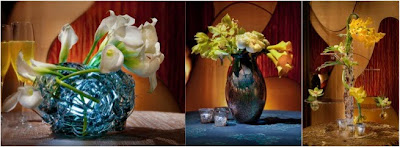
Style #1 The Nido Glass - “Beautiful Hand-blown glass vase with intertwined dwarf callas perched on a Tiffany Sunset Fortuny Crushed Linen”

Style #2 The Milano - “Gilded Vase filled with Cymbidiums, Imported Roses, and Callas nestled on Iridescent Taffeta topped with a Chiffon Velvet Blue Topaz overlay”

Style #3 Cascading Callas - Custom designed, multi-tiered, Lucite stand specifically crafted to hold small, delectable treats brought out by waitstaff. This piece proudly stands atop a Golden Paillette Overlay”

To vote for your favorite, visit: http://escs10awards.crowdcampaign.com/

Monday, February 22, 2010

Floorsquare Anyone?

I have been playing on Foursquare for the last two months and I admit it is a fun concept: being able to geo-position yourself, check-in, insta-tweet where you are, find others there all while competing with your friends to rack up points, earn Mayor-ships, and unlock badges (though I wish someone would tell me how to unlock those darn badges!). And lets not forget - there are some fantastic deals on Foursquare: free food and drink when you show up at your local establishment and show them that you have checked in or are the mayor. You bet I've saved $10 or $20 bucks off the bill! (And you bet it makes me go back.)

But I am much more excited about what I foresee as the event-take on this technology: Floorsquare! The next great innovation for the Tradeshow Business. (And trademarked by BeEvents, right now.)

Think about it - attendees download a customized version of the application for your conference or tradeshow event and are able to check-in at various points throughout the room. As show producers, secret badges, special prizes and unique add-on experiences could be built into the floorplan. Add in and RFID chip and attendees can find one another, connect, and connect with vendors. Why let someone scan your badge or name tag and waiting for a vendor to send you information. Why not let that information be selected by the customer to access when they return home and log into your personalized Floorsquare homepage.

But it is more interesting to think how vendors could have a field-day with the technology as they try to woo and connect with customers - through special offers, badges, rewards, and freebies. At a time when sponsorship in general is old, boring and down, whoever can capitalize on this sort of interactive sponsorship could rake in the funding to cover the cost of implementation and then some.

I am sure there needs to be advances in the ability of mobile devices to geo-locate within a confined space. Then there is the lack in service at most convention centers in the country (they still believe they can charge ridiculously for access/mobile companies have not seen the value in investing in the repeaters necessary for the concrete masses that are most convention centers.) And sure this is an idea most likely rolled-out by some uber-fantastic show like the annual Consumer Electronic Show. But the concept is so simple, easy to adapt, conceptually, easy to understand, and I think would be just a LOT of Fun.


Tuesday, February 9, 2010

Bubbles on the Surface

My conceptual mind is a tinkering away today. The analogy is not yet right, but the question is firm and good:

Will the "Community" surpass the "Event" as the thing? So that events are simply bubbles on the surface of things?

I was re-reading an article this by @samueljsmith in the e-book Social Media for Events by @ready2spark and two specific points leaped off the page at me:

"Attendees will expect to connect with other delegates before, during, and after the event." & "New Events will emerge from online communities."

I am a strong believer in both of these statements (as well as the other 8 great points Samuel makes in the article) and have for a while been articulating the change in the event atmosphere and the understanding of event design and event education. But today a new thought happened! Forever, I have thought about events as "the event" - it is that which we prepare for, which attendees get excited about. The Event has always been the thing. And communities occurred as a result of the event; that is to say that people would meet at a conference or event and then stay in touch as new contacts in a Rolodex-version-of-community. But with a changing understanding of how adult learning occurs, more and more focus has been placed on conversation before, during and after the event. The explosive growth of Social Media continues to demonstrate that the power of the community to shape dialogue and make change is vast.

So what if the Community is really the thing, and not the event? What happens if we re-envision events as momentarily emergences from the conversations within a community that occur over the course of time. What if we consider first the community and its dialogues as the primary experience and like the warming lava inside lamp, at given periods of time portions of the population become excited and bubble up into gatherings on a certain topic, around a specific discussion, or for a special need of the community. As the accomplish their task, they fall back into the community and the conversation continues.

Perhaps a lava-lamp is not the best visual image here, but it gets at the point. Or maybe it is more like that plasma light I used to love to play with as a kid - lots of particles (=people) flying around inside a defined space (=community) in and amongst low pressure gases which makes them excited and visibly functional (=brand, organization, conversation, interest) and act on the sphere by touching your finger to the outside (=action of putting on an event) you cause some of those electrons to get hyper excited and come together to form potent streams of lights.

Tuesday, January 19, 2010

You bet crowdsourcing has a place at your next event.

Social media is all about community building. But what do you do when you have a problem and want to get input from that community? Well, you crowdsource!

Crowdsource! What is that? Crowdsourcing is taking a problem which you would normally solve within your company or your team and pushing it out, or outsourcing it, to a large community of unknown or known people seeking their solutions and contributions to accomplish the task or solve the problem.

What does this have to do with events? Well maybe everything. Many of the daily tasks or challenges - Say "Where are we going to have this year's conference?" can be outsourced to a knowledgeable community of event professionals or destinations who can offer input and provide solutions.

But I like crowdsourcing for another reason: it offers the possibility of empowering your attendees to help define and design their experience at your event. Imagine it: you can crowd source various elements of the event to your attendees and let them vote or have input or even make suggestions for what they want to experience. What entertainment do you want to see? Ask the audience. What food will you serve for the gala's main course? Ask the audience. Do you want to take a boat tour or head to a karaoke bar? Ask the audience.

All of these suggestions and a hundred others which might be asked or polled amongst an audience of attendees put the event planner in a unique position. By soliciting input from your guests you excite them, energize them prior to the event. You enable the opportunity to open dialogue prior to the event and at the event ABOUT THE EVENT which is becoming increasingly critical as brands and organizations compete for valuable time of their guests. Giving up ownerships increases the likelihood of success because you have gotten direct, measurable input for those who matter most, the attendees.

But lets take it one step further. For the embattled incentive trip, crowdsourcing solutions that allow the audience to help choose the destination and define the experience creates a whole new motivator for sales teams. If they are able to define the experience of their dreams which they will receive upon the successful completion of goals or sales would only increase their drive to meet those goals. Crowdsourcing could be your corporation's best incentive in driving success, motivating behavioral change and redefining the incentive rewards program to help meet your business objectives.

Sunday, January 17, 2010

Inspiration: Target Golden Globes Commercial

Alright! Who caught the new Target Commercials tonight during the Golden Globes! They were fantastic works of art created by Catalyst Studios and showcasing the talent of Moses Pendelton's MOMIX Dancers.

My inspiration: Origami is back. The fantastic use of shape combined with the natural product like paper will make for great Event Decor for some upcoming projects!


Tuesday, January 5, 2010

BeInspired

Editor's Note: This article is a shortened post of the January 2010 Design Column in Event Solutions Magazine, pages 48-49.

N-E-W-Y-E-A-R spells Relief! Or so go the hopes and exaltation of many event designers and producers this year. I don’t know about you, but 2009 needed to be done. At best, the year was a mixed bag. And at worst a lot of twiddling of thumbs as clients remained unsure and indecisive. Or my new favorite: the reinforcement of the increasingly bad behavior of contracting and delivering projects with days or less notice. But all that (hopefully) is remains in 2009.

With a new year off and running, its time again to be inspired. But where can you find inspiration for your new project or an old one in desperate need of rejuvenation? Here are a few tricks which get my creative juices going.

Go Shopping: for everything except what is on the store shelves that is. Retailers spend mucho dollars each year, forecasting trends and implementing colors and styles that will trickle down in 1-3 years to the event world. But beyond the commercial goods, look closely at the way retailers display their goods. Creating places for customers to pause or various focal points to draw customers through large spaces is what retail store designers are good at. And they employ many of the same strategies event designers can to accomplish the same goal. So look close next time you walk into Target or Crate & Barrel or your favorite store. The next great trend in buffet displays may turn out to be little more than an innovation on a sweater rack.

Don’t want to leave your house? Turn on the TV ...and watch the commercials. Same thing goes – watch closely and you will see trend colors, styles, motifs, and patterns emerge before your very eyes. Television programs can contribute to, particularly those which tap into the current cultural emotion. There is a reason the television show Mad Men is so popular. In our uncertain economic climate, the emotional trend is towards authentic experiences that remind us and re-inspire us about the simple good things in life. Classic, formal style has returned, but with a modern twist.

Go Swatching! Now I know clients give me a funny look every time I suggest we hit the hardware store, but truth be told, the paint section of your local hardware giant or hometown store is one of the best places to play with color. Grab a handful of those over-sized color chips in colors that strike you or your clients as favorites or inspirational. Having the big color chips makes it easy to mix and match and find a palette that suits your needs. Use this to build a style or color board incorporating favorite element and decorative items and before you know it your design will start to emerge.
Read more about using color from the impeccable Sasha Souza.

Branch Out: One of my favorite new inspiration ideas is that of branching. It is a version of brainstorming where you take an object and describe every detail of it, eventually using those details as the base of your design. So lets say you have a client who loves watermelon. You can use the watermelon as your inspiration. First list all of its qualities: red, green, white, seeds, black, round, oval, heavy, large, wet, sweet, etc. Perhaps consider the things that come to mind when you think of watermelon: summer, sun, outdoors, grilled foods, holiday, etc. Use those ideas and elements to create your event: your color palette may include variegated shades of greens and melon red. Flowers may be large, heavy and round in shape but with a sweet summery scent. Perhaps oval dishware. This is not about literally doing an event that has watermelons as centerpieces and looks like a watermelon! It is about being inspired by the essence of the watermelon to create your design.
Learn more about branching from The Wedding Guys Blog.

Now it's your turn. Where do you find Inspiration??


Sunday, January 3, 2010

Let's go 3-D!

So it's New Years weekend and like millions of other individuals I headed to the theater to catch the new Avatar movie. Blowing (too much money) on tickets and (way too much money) on snacks, I looked down at my ticket and noticed we were watching the flick in...3-D!

"Oh great" I joked with my fellow movie goer. "I can't wait to put on my silly paper glasses of red and blue" Boy was I wrong.

The glasses we received were not of the cheese I remember, but thick black plastic with "plain" lenses. And once the movie began, the screen literally came to life. To see creatures and images leap forward off the screen to me in my seat was a revelation. And I said to myself what any self-respecting event designer would: When can I do this.

Imagine it: 3-D would bring wonders to event design. Attend an event, don some funky glasses and experience video projected images come to dimensional reality right in front of your eyes. It adds completely new layers to conceptual design. Not only are their real props, but 3-D video props and environmental features popping off the screen This would be the personalization of experience. Integrate augmented reality and interactive 3-D video and you the guests would choose your own experience.

Now who is to say this would be functional? The level of sophistication and planning to craft an experience that was not Disney-fied as a "walk-through" expereince but could exist over-time would be extensive. Still I love the thought of the challenge. So techies tell me: how soon before I can play with the third dimension?

(The movie was a visual splendor by the way. Not my favorite script of the year, and for the reason though I am sure it will be offered the Oscar, I can think of better choices, but COMPLETELY worth seeing for the visuals. This is the stuff of a chocolate factory: pure imagination. It also tells me hyper-color is on its way back in. See the movie and then tell me if you don't agree.)


Friday, February 6, 2009

Consider the Company


Social Networking has found a host of new sites to call home – websites that is. But whether you have a profile on Facebook or are building your connections on Linked-In, the downside to online networking is that your connections require connectivity! So here is a novel idea: instead of inviting new contacts to My Space, consider hosting them at your actual space. Around your table perhaps…

Spice up your next night-in by inviting a group of people who only have YOU in common. Host a dinner party for guests who do not know each other but you think should. They could be the five most interesting people you know, or 10 friends each from a different time of your life. Sure enough you are bound to mix a bunch of people who could grow to be great connections for each other. As host, you simply provide the venue in which these natural connections can take place over cocktails and cuisine. And as your evening progresses, the conversation is sure to be fascinating. Social networking in person; what a crazy concept!

Fast Tip: Looking to jump start the conversation at your next dinner party? Try Party Topics (www.tabletopics.com). Available as coasters, napkins or place cards, Party Topics offer 12 starter questions sure to get the conversation going.